
Know your lining
Sunlight, moisture and age wear linings out. Cleaning doesn’t cause
that damage, but it can show it. Here’s what to look for in the four most
common types.
Old cotton linings
Old cotton linings, particularly those exposed to strong sunlight over time, can become fragile and prone to damage. In regions like New Zealand, where UV intensity is especially high, sun exposure can significantly weaken curtain fabrics – even if the main curtain material still appears intact.
Washing risks. Even with gentle hand-cleaning techniques, cotton linings that have sustained sun damage may disintegrate or tear during the cleaning process. Once the fibres have deteriorated, they can no longer withstand even minimal handling.
What UV damage does
Prolonged UV exposure breaks down the natural fibres in cotton.
- Fading of colour
- Loss of strength and flexibility
- Brittleness that can result in tearing or fraying
What to look out for
Weakened areas may look worn and lose the ability to support the curtain.
- Visible wear: fading, brittleness or small tears, especially where sunlight hits.
- Changes after cleaning: damage that appears or worsens is usually existing UV degradation, not the cleaning.
- Longevity: sun-damaged linings can keep deteriorating even after repairs.
What can be done
Often the curtain can be saved.
- Lining replacement: if the curtain fabric is still good, we can often replace just the linings.
- Customer consultation: we talk through any deterioration before or after cleaning.
- Expert repairs: our workroom team can reinforce damaged areas.
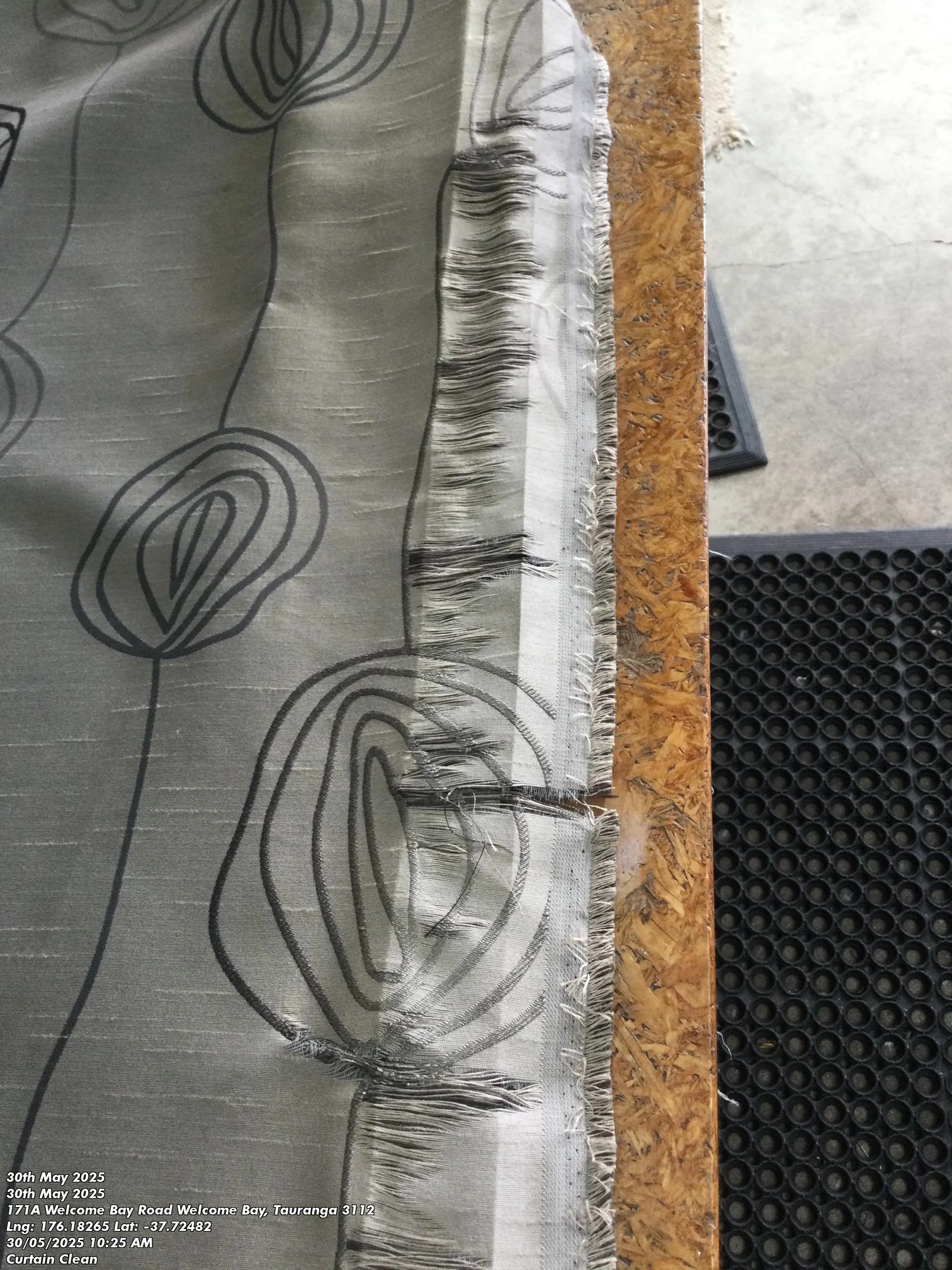
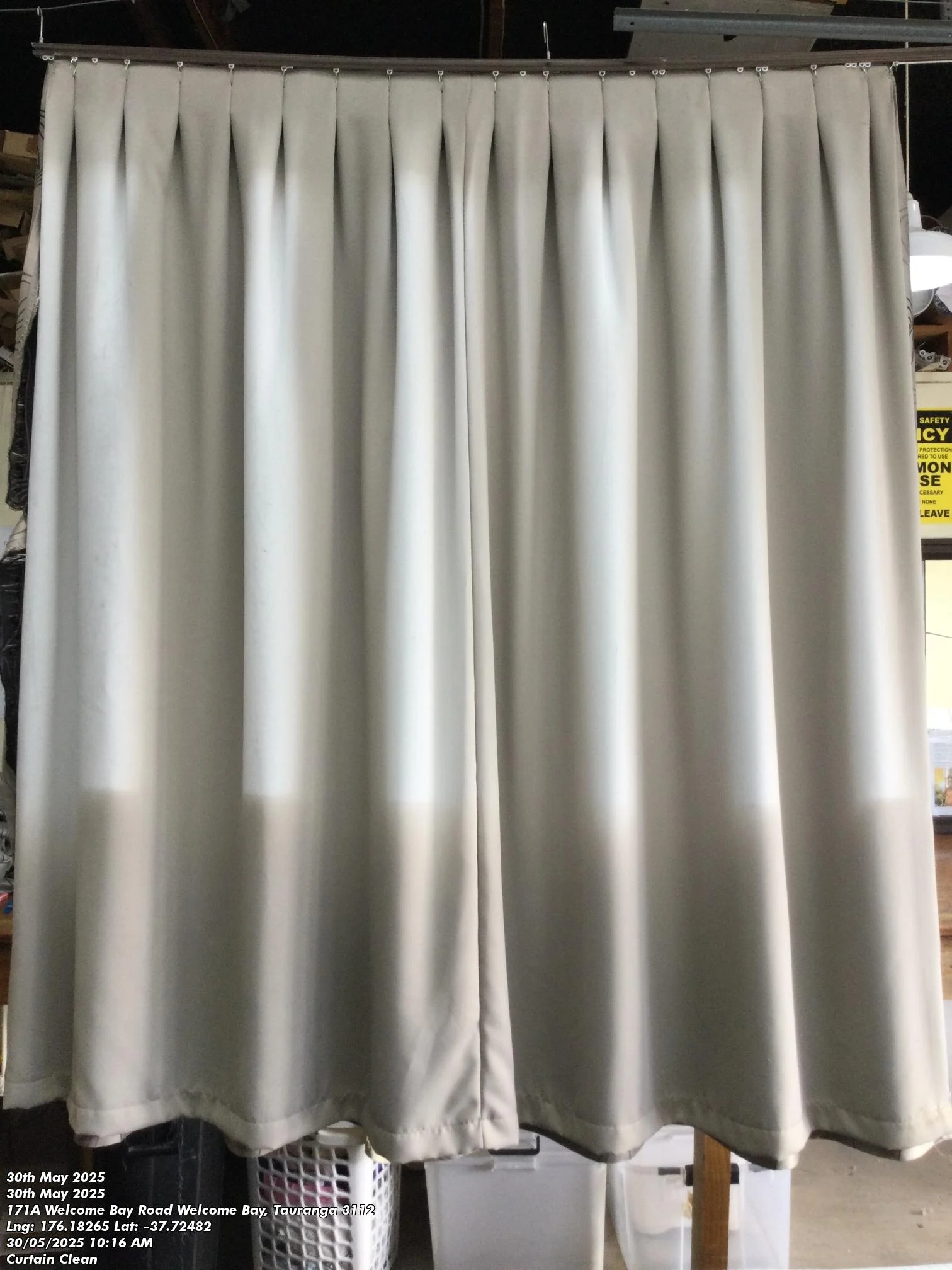
In summary, old cotton linings can show significant wear from sun exposure, but clear communication, careful cleaning and expert repairs help manage it.
Thermal lined and coated curtains
Thermal curtains come with unique maintenance challenges, especially as they age or endure prolonged sun exposure. One of the most common issues is a sticky or deteriorating thermal coating, which affects both the performance and appearance of the curtains.
How to spot it: by the colour (yellow and burnt looking) or by the feel, usually a white powder-like residue.
If you notice a burnt look like the ones in the photos, chances are we won’t clean these, as the coating is already damaged from sun exposure.
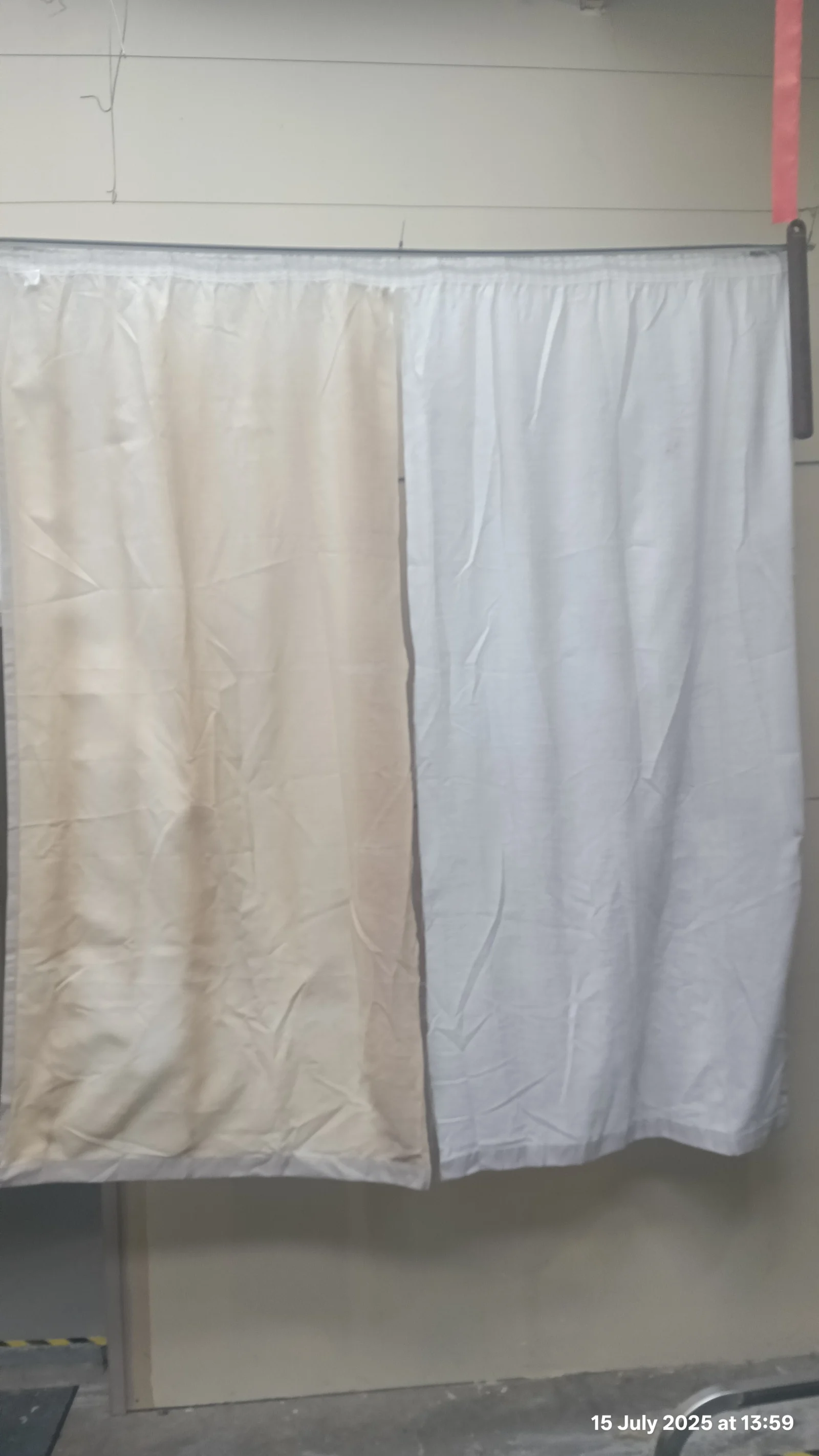
What causes sticky thermal curtains?
The biggest culprit is UV radiation, which breaks down the coating on the back of the fabric. That leads to:
- Stickiness
- Peeling or flaking
- A patchy or streaky appearance
Age and material quality. Lower-quality thermal fabrics tend to degrade faster. As the coating ages it becomes tacky and may start to disintegrate, especially during cleaning.
Signs to watch out for
Check the coated side of the curtain.
- Stickiness or tackiness to the touch
- Peeling, flaking or streaky appearance on the coating side
- A burnt, brown look
- A rubbery or brittle feel on the coated surface
What we do to help
Careful handling
When sticky thermals are packed, we lightly dust them with baby powder (cornstarch-based) to stop the layers sticking together.
Visual minimisation
In some cases patching can reduce visible damage, though that isn’t always possible or effective, depending on severity.
Relining service
If your curtains have separate linings, or the main fabric is still good, we can quote for relining. It extends the curtain’s life and restores thermal performance.
Blockout linings
Old cotton linings, particularly those exposed to strong sunlight over time, can become fragile and prone to damage. In regions like New Zealand, where UV intensity is especially high, sun exposure can significantly weaken curtain fabrics – even if the main curtain material still appears intact.
Washing risks. Even with gentle hand-cleaning techniques, cotton linings that have sustained sun damage may disintegrate or tear during the cleaning process. Once the fibres have deteriorated, they can no longer withstand even minimal handling.
What happens when they break down
- The coating separates (delaminates) from the fabric.
- It can slump, peel or flake off, especially when wet.
- The result is an unsightly mess that can’t be repaired once it occurs.
Key causes
- Sun exposure (UV speeds up breakdown)
- Washing or moisture, which lifts or melts the coating
- Inferior quality linings
- Ageing of the adhesive used in manufacturing
What to watch out for
- Curtains in direct sunlight
- Older curtains (especially 5+ years)
- Cracking, peeling or discolouration on the back of the lining
- Deterioration that shows up after cleaning
What blockout deterioration looks like
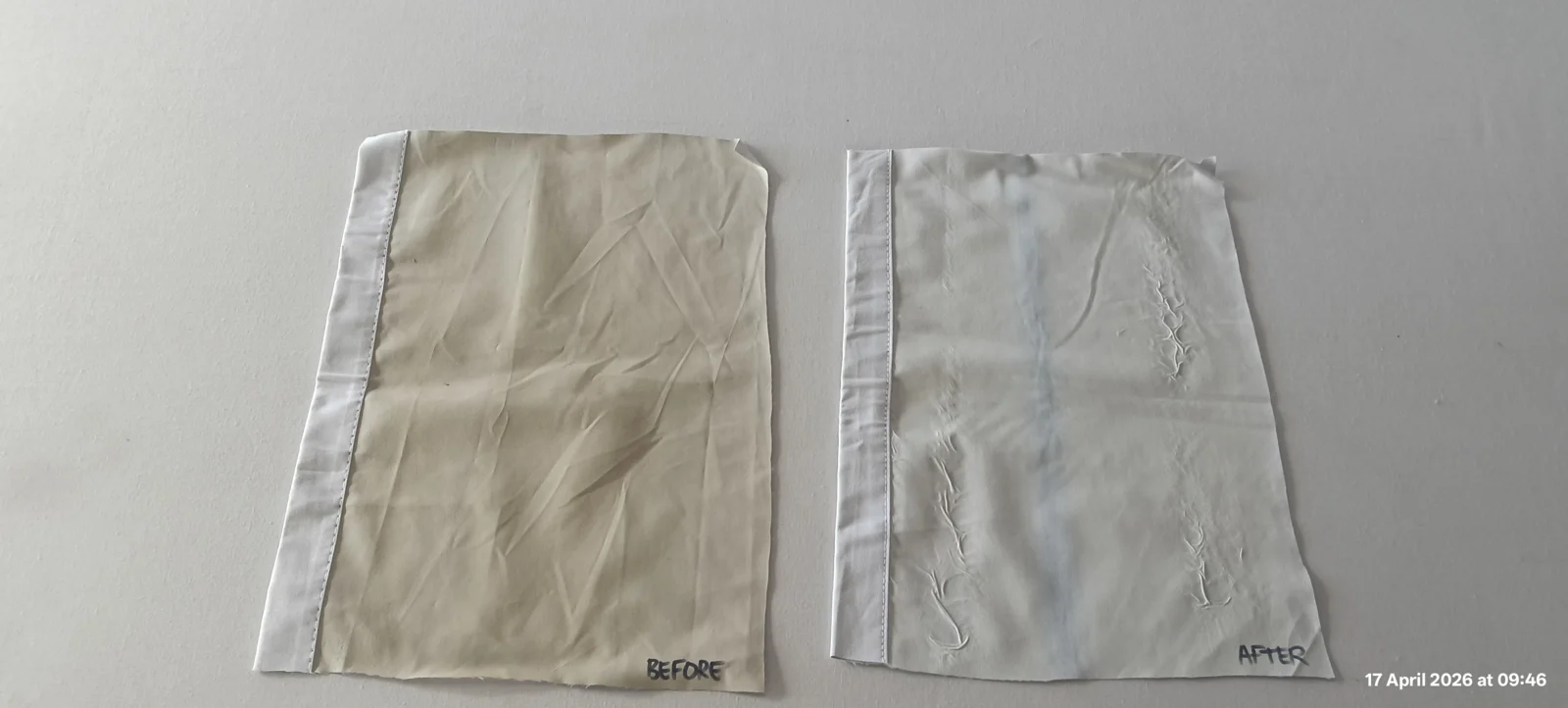
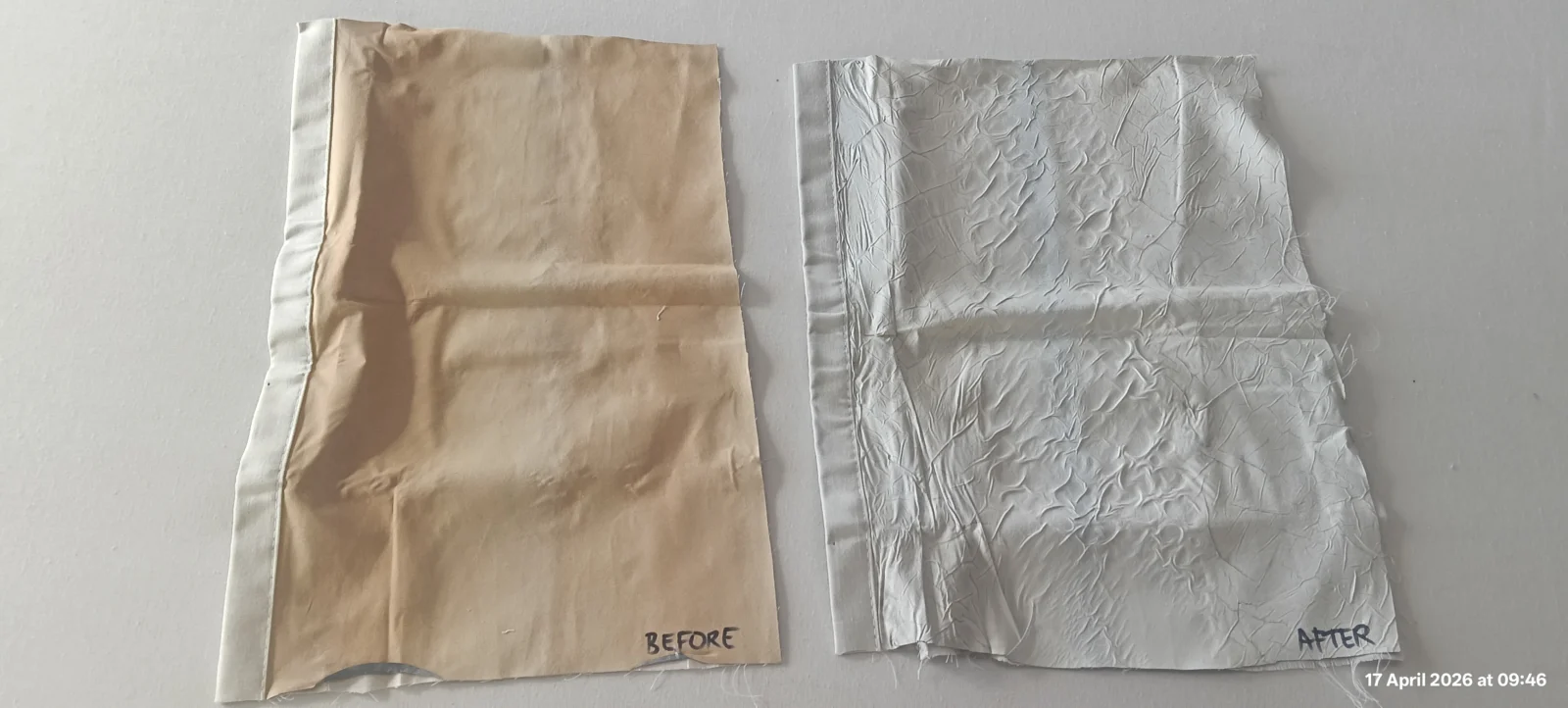
That scale-like look is what we call “elephant skin”. It only happens during the wash, and only shows once the curtains have been wet.
During our assessment we note if the lining shows signs that the curtain may have issues in cleaning. We look for yellowing and a very stiff feel.
Triple weave linings
What is triple weave? Triple weave (or triple-pass) lining is a curtain backing made from three layers of fabric, including a light-blocking middle layer. It’s designed to block light, insulate against heat and cold, and protect the face fabric of the curtain.
The issue. Over time triple weave linings can deteriorate, especially from sun exposure and general wear. They’re durable, but not immune to environmental factors and ageing.
Signs to watch out for
- Patchiness or streaks in the lining
- Areas where the colour looks faded or uneven
- Changes that become more obvious after cleaning, once dust and dirt are removed
Important
This kind of deterioration is irreversible once it begins, and it worsens over time. Cleaning doesn’t cause the damage, but it can show it more clearly by removing the surface layer of dust.
Our recommendation
Don’t wait for the next clean. Relines are best done before further wear or washing.
We provide professional relining services and are happy to give you a quote.
Get a Price
Quick, no-obligation pricing for your curtains and blinds using
our online estimator.
Find an Agent
We have a network of agents across the North Island.
Find the drop-off point closest to you.